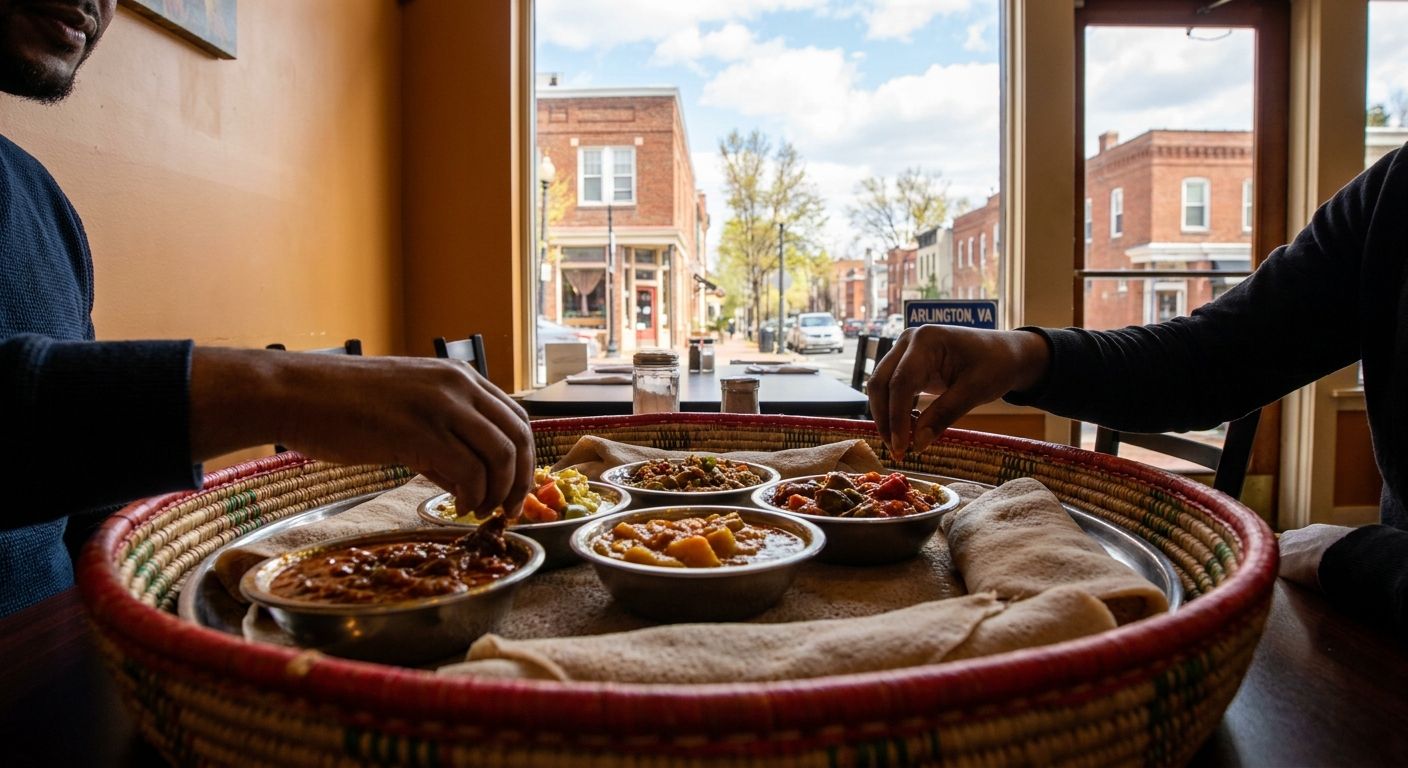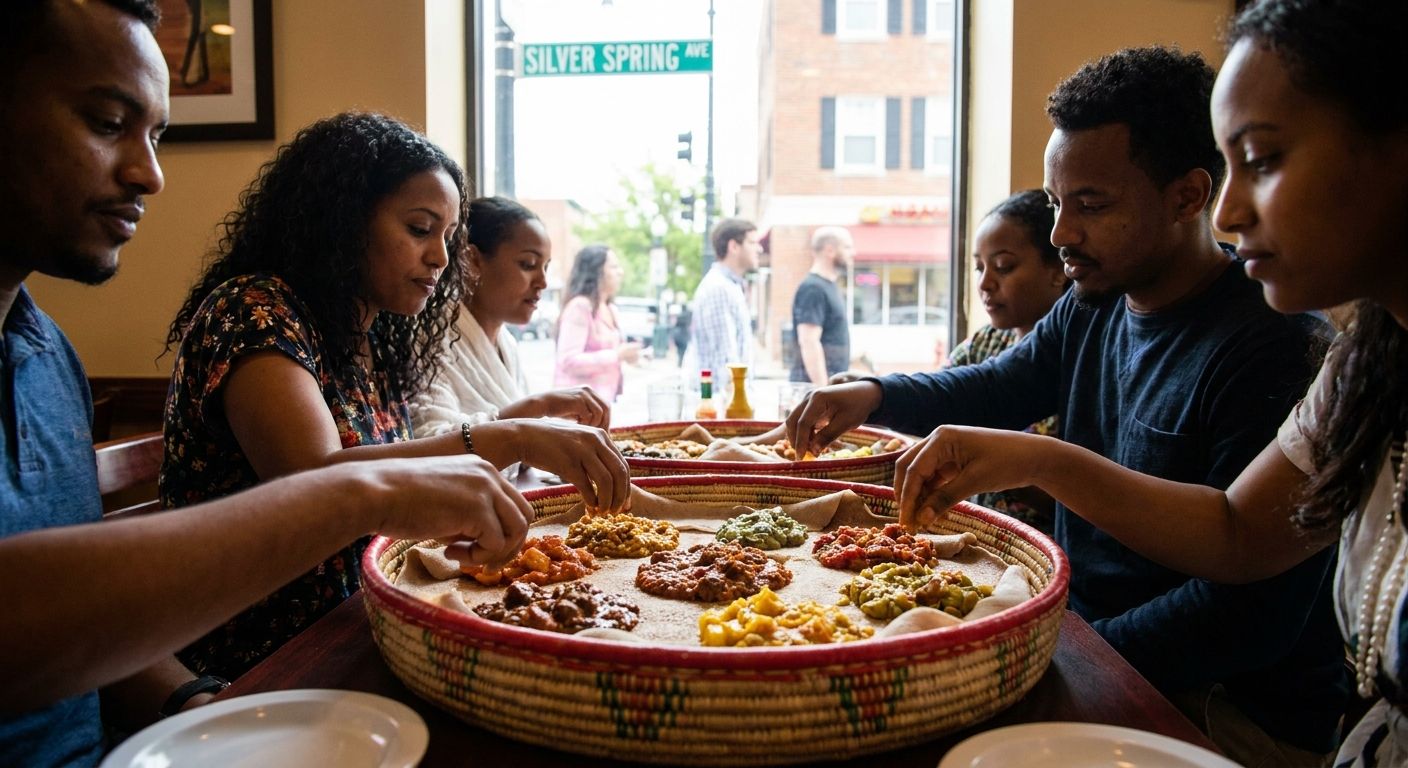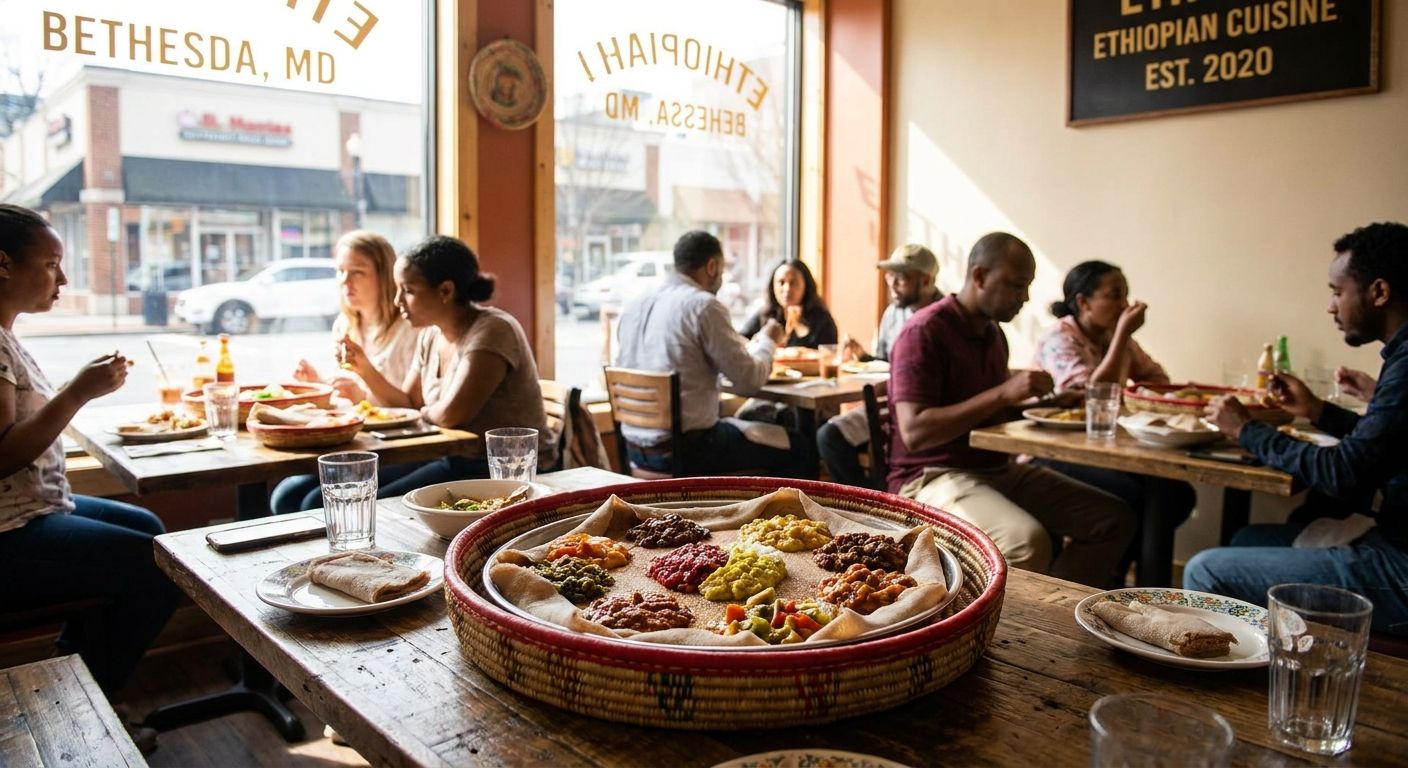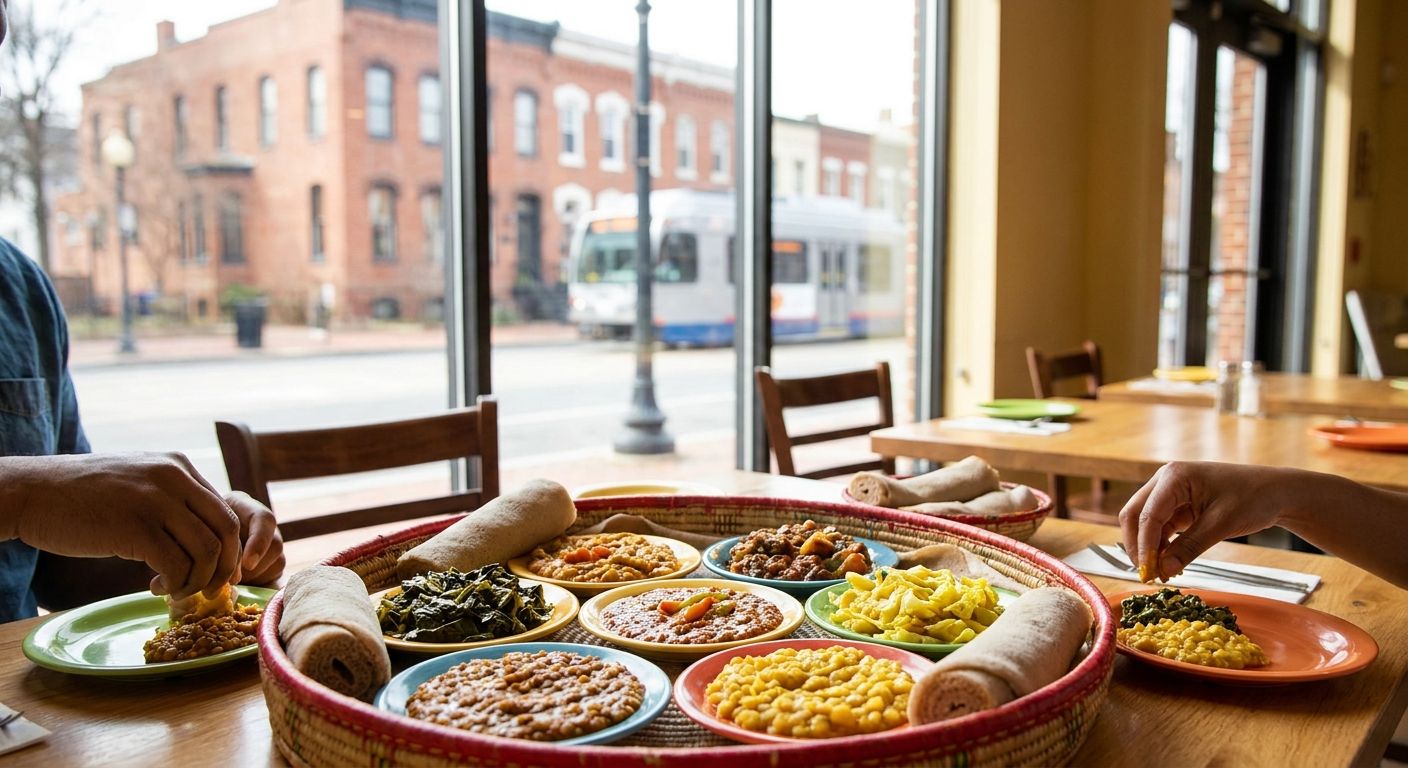
Washington DC's Ethiopian food scene runs almost entirely on lentils, split peas, and collard greens once you look past the meat combos, and six dishes account for most of what locals order when they search ethio vegan dc. Misir wot wins best overall, shiro wins best for first-timers, and the beyaynetu combination platter wins best for groups who can't decide.
- Misir wot is the best overall pick for ethio vegan dc diners in 2026 — spicy, lentil-based, and on nearly every menu.
- Shiro is the mildest entry point for anyone new to Ethiopian vegan food.
- Yetsom beyaynetu (the vegan combo platter) lets you sample five or six dishes on one plate of injera.
- Gomen and fosolia carry the least heat, good for diners who want vegetables without chili oil.
- Kik alicha's turmeric-yellow split peas are the sweetest, mildest dish on this list.
Why this matters
Ethiopian food didn't become vegan-friendly by accident. The Ethiopian Orthodox Church calendar sets roughly 200 fasting days a year, and observant households avoid meat and dairy on those days — which is why the cuisine built out an entire second menu of lentil, pea, and vegetable stews long before "plant-based" became a marketing term.
That history matters for anyone searching ethio vegan dc in 2026: the vegan dishes aren't an afterthought bolted onto a meat-heavy menu. They're the fasting menu, or beyaynetu, and it's often the most flavorful section of any Ethiopian restaurant's offerings. Adams Morgan alone has multiple spots serving versions of these dishes, including Tsehay Restaurant & Bar.
What makes the best vegan Ethiopian dish
Before ranking anything, here's what separates a forgettable stew from one worth ordering again:
- Berbere balance — the chili-spice blend should build heat, not just deliver it in one hit
- Legume freshness — lentils and split peas turn mushy or gray-tasting when they sit too long
- Injera quality — the sour teff flatbread is the utensil; stale or gummy injera ruins a good stew
- Vegetable variety — a strong fasting platter mixes textures (creamy, crunchy, leafy) instead of repeating the same base
- No hidden dairy or stock — niter kibbeh (spiced butter) sometimes sneaks into dishes marketed as vegan, so real vegan prep should use vegetable oil instead
At a glance: vegan Ethiopian dishes ranked
| Dish | Best for | Standout feature | Key limitation |
|---|---|---|---|
| Misir Wot | Spice lovers, first order | Berbere-forward red lentils | Heat can overwhelm mild palates |
| Shiro | Newcomers to Ethiopian food | Smooth, mild chickpea stew | Less textural variety |
| Yetsom Beyaynetu | Groups, indecisive diners | Samples 5-6 dishes at once | Smaller portion of any single dish |
| Gomen | Diners avoiding heat | Simple sautéed collards | Can taste plain on its own |
| Kik Alicha | Sweet, mild palates | Turmeric-yellow split peas | Least assertive flavor on the list |
| Fosolia | Crunch and freshness | Green beans and carrots, lightly spiced | Thinner sauce, less filling alone |
1. Misir Wot: best vegan Ethiopian dish for spice lovers
Misir wot is red lentils simmered down with berbere, garlic, and onion until the sauce turns deep red-brown. It's the dish most Ethiopian menus lead with, vegan or not, because the lentils absorb the spice blend fully instead of just sitting in it.
Misir wot pros:
- Deep, complex heat that builds instead of spiking
- Widely available — nearly every Ethiopian kitchen in DC makes a version
- Reheats well, so leftovers hold their flavor
Misir wot cons:
- Too spicy for diners sensitive to chili
- Recipes vary in heat level restaurant to restaurant, so ask before ordering if you're cautious
Verdict: Order. This is the dish to try first if you're only ordering one.
2. Shiro: best vegan Ethiopian dish for first-timers
Shiro is a smooth stew made from ground chickpeas or broad beans, cooked with onion, garlic, and a lighter hand of spice than misir wot. It has a texture closer to hummus than a chunky stew, which makes it approachable for anyone who's never had Ethiopian food.
Shiro pros:
- Mild enough for spice-averse diners
- Naturally creamy without any dairy
- Pairs well with almost any other dish on a combo platter
Shiro cons:
- Lacks the textural contrast of chunkier stews
- Can taste one-note if the kitchen skimps on garlic and onion
Verdict: Order as your entry point, then branch out from there.
3. Yetsom Beyaynetu: best vegan Ethiopian dish for groups
The fasting combination platter, or beyaynetu, arranges small scoops of several vegan stews — usually misir wot, shiro, gomen, kik alicha, and a salad — around a base of injera. It's built for sharing and for indecisive tables.
Yetsom beyaynetu pros:
- Covers the whole spice range in one order
- Best value when splitting between two or more people
- Shows off a kitchen's full range at once
Yetsom beyaynetu cons:
- Portions of each individual dish are smaller
- Not ideal if you already know you want a full serving of one specific stew
Verdict: Order for first-time visits or when the table can't agree.
4. Gomen: best vegan Ethiopian dish for avoiding heat
Gomen is collard greens sautéed with onion, garlic, and a light touch of ginger — no berbere involved. It's the closest thing on an Ethiopian menu to a plain sautéed vegetable side, and it works as a palate reset between spicier bites.
Gomen pros:
- Zero chili heat, safe for sensitive stomachs
- Light and easy to finish even after a heavy meal
- Good counterbalance on a beyaynetu platter
Gomen cons:
- Can taste flat without the acidity or spice found in other dishes
- Rarely satisfying as a standalone order
Verdict: Order as a side, not as your main dish.
5. Kik Alicha: best vegan Ethiopian dish for mild, sweet flavor
Kik alicha is yellow split peas cooked with turmeric, onion, and garlic — no chili at all. The turmeric gives it a bright yellow color and a faint earthy sweetness that makes it the mildest wot on most menus.
Kik alicha pros:
- The sweetest, gentlest stew on this list
- Good option for kids trying Ethiopian food for the first time
- Turmeric adds color and mild anti-inflammatory reputation without changing the dish's approachability
Kik alicha cons:
- Some diners find it bland next to bolder dishes
- Easy to overlook on a beyaynetu platter next to spicier neighbors
Verdict: Order if you're cooking for kids or spice-sensitive guests.
6. Fosolia: best vegan Ethiopian dish for crunch and freshness
Fosolia combines green beans and carrots, lightly sautéed with garlic and a touch of berbere or cumin. It's the crunchiest dish on the list — most of the stews above cook down soft, but fosolia keeps some bite.
Fosolia pros:
- Textural contrast against softer lentil and pea stews
- Lighter sauce, good if you want something less rich
- Works well as a side on a mixed platter
Fosolia cons:
- Thinner sauce means it can dry out if it sits under a heat lamp too long
- Not filling enough to serve as a full meal by itself
Verdict: Order as a supporting dish, not your only order.
How this list was ranked
Each dish above was scored against the five criteria listed earlier — berbere balance, legume freshness, injera pairing, vegetable variety, and dairy-free prep — then assigned a distinct "best for" use case so the list functions as a decision guide instead of a straight leaderboard. No two dishes compete for the same slot: spice lovers, newcomers, groups, heat-avoiders, mild palates, and crunch-seekers each get a clear answer.
“The fasting menu isn't a side note on an Ethiopian menu — it's often the most flavorful section on it.”
Which vegan Ethiopian dish should you order?
If you're ordering one dish and want the fullest picture of Ethiopian cooking, misir wot is the default answer in 2026 — it's the dish that shows up on nearly every menu and carries the most recognizable flavor profile. If you're new to the cuisine or dining with someone who avoids spice, start with shiro or kik alicha instead. Dining in a group of three or more people searching ethio vegan dc options together? Yetsom beyaynetu solves the ordering debate by putting five dishes on one plate.
Try the vegan menu in Adams Morgan
See what's on the fasting menu at Tsehay Restaurant & Bar in Adams Morgan.
FAQ
What is the best vegan Ethiopian dish to order first?
Misir wot is the best first order for most diners in 2026 — spicy red lentils in a berbere sauce that most Ethiopian restaurants make well. It shows up on nearly every menu, vegan or not.
Is Ethiopian food naturally vegan-friendly?
Yes. The Ethiopian Orthodox Church observes roughly 200 fasting days a year, during which meat and dairy are avoided, so the cuisine developed an extensive lentil, pea, and vegetable menu independent of any modern vegan trend.
What's the mildest vegan Ethiopian dish?
Kik alicha, made from turmeric-spiced yellow split peas, is the mildest option on most menus. It has no chili heat and a faintly sweet, earthy flavor.
What is beyaynetu?
Beyaynetu is a combination platter of several vegan stews served together on injera. The vegan version is called yetsom beyaynetu, and it's the best way to sample multiple dishes in one order.
Is shiro or misir wot better for beginners?
Shiro is milder and creamier, making it the safer choice for someone who has never had Ethiopian food. Misir wot is more flavorful but carries more chili heat from the berbere spice blend.
Does injera contain animal products?
Traditional injera is made from teff flour, water, and a natural fermentation starter, with no animal products involved, which is why it pairs with every dish on a vegan Ethiopian platter.
What vegetables show up most in Ethiopian vegan cooking?
Collard greens (gomen), green beans and carrots (fosolia), and cabbage with potatoes (tikil gomen) are the most common vegetable-forward dishes alongside the lentil and pea stews.
One last thing
The detail most first-time diners miss: niter kibbeh, the spiced butter used in Ethiopian cooking, sometimes ends up in dishes marketed as vegan by accident. If a stew tastes unusually rich, it's worth asking whether it was prepared with vegetable oil instead — a quick question that avoids an unwanted dairy surprise on what should be a fully plant-based plate.
Ethiopian vegan cooking in 2026 doesn't need modern rebranding to earn the label — it's been the fasting menu for centuries, and misir wot, shiro, and yetsom beyaynetu remain the three dishes worth building an order around in Washington DC.